Do Stone or Ceramic Tiles Stop Rising Damp?
Tiling over a damp wall hides the problem but doesn’t cure it. Learn what happens behind tiled walls, and why you should treat rising damp before you tile.

How Rising Damp Occurs
A step-by-step look at how moisture moves from the ground into a wall — ground moisture, porous masonry, capillary action, and the role of the damp-proof course.
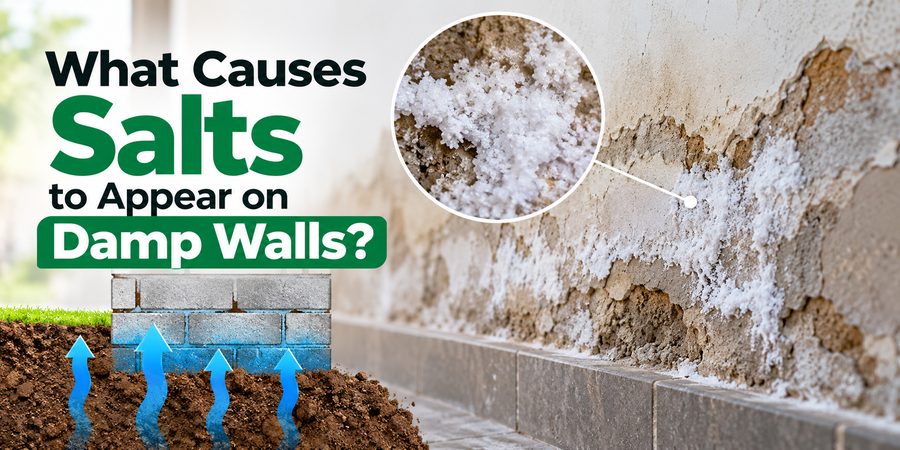
Salt on Walls: What Causes It and What to Do
White, powdery salt on walls is usually soluble salt carried through masonry by moisture. Learn where it comes from, why it damages paint and plaster, and what to do.
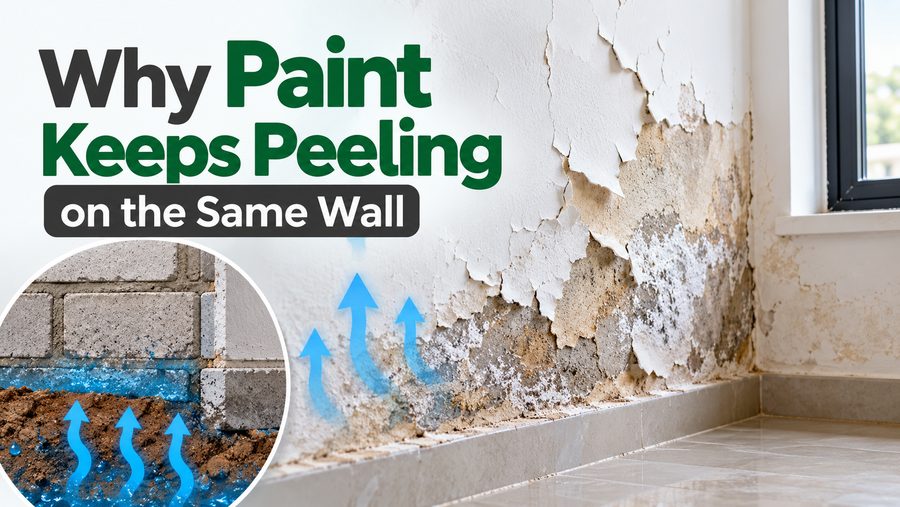
Why Paint Keeps Peeling on the Same Wall
Repainting a failing wall can hide the problem for a while — but if it keeps failing in the same spot, the cause is usually still there underneath.
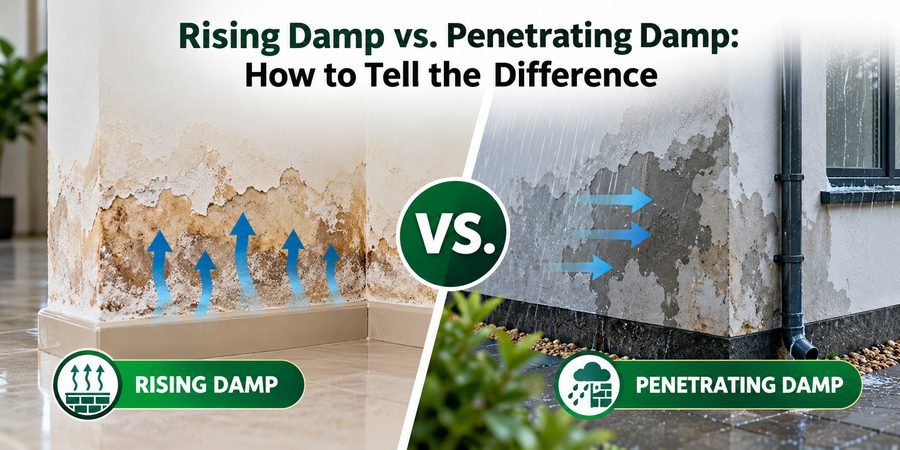
Rising Damp vs. Penetrating Damp: How to Tell the Difference
Rising damp and penetrating damp can look similar but have different causes. Learn how to tell them apart by location, pattern, and response to rainfall.
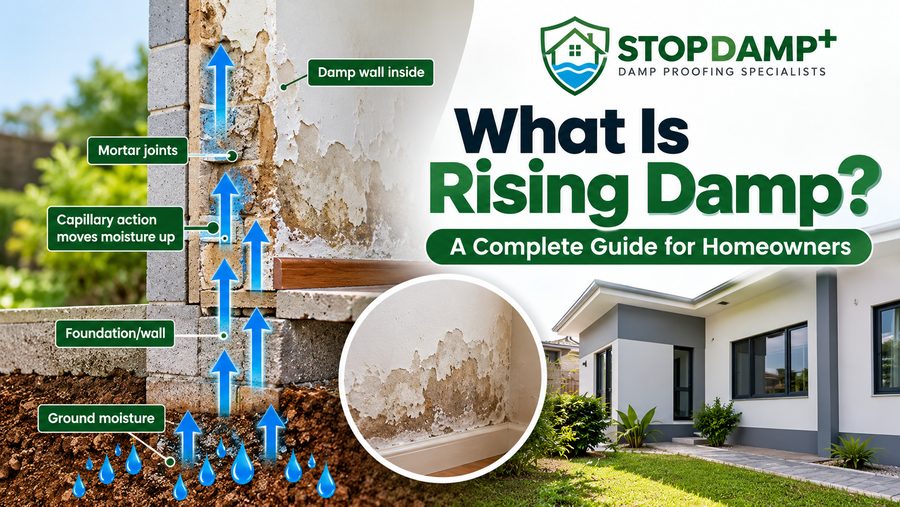
What Is Rising Damp? Causes, Signs and Diagnosis
A plain-language guide to what rising damp is, how it happens, the damage it causes, and how to tell it apart from penetrating damp and condensation.
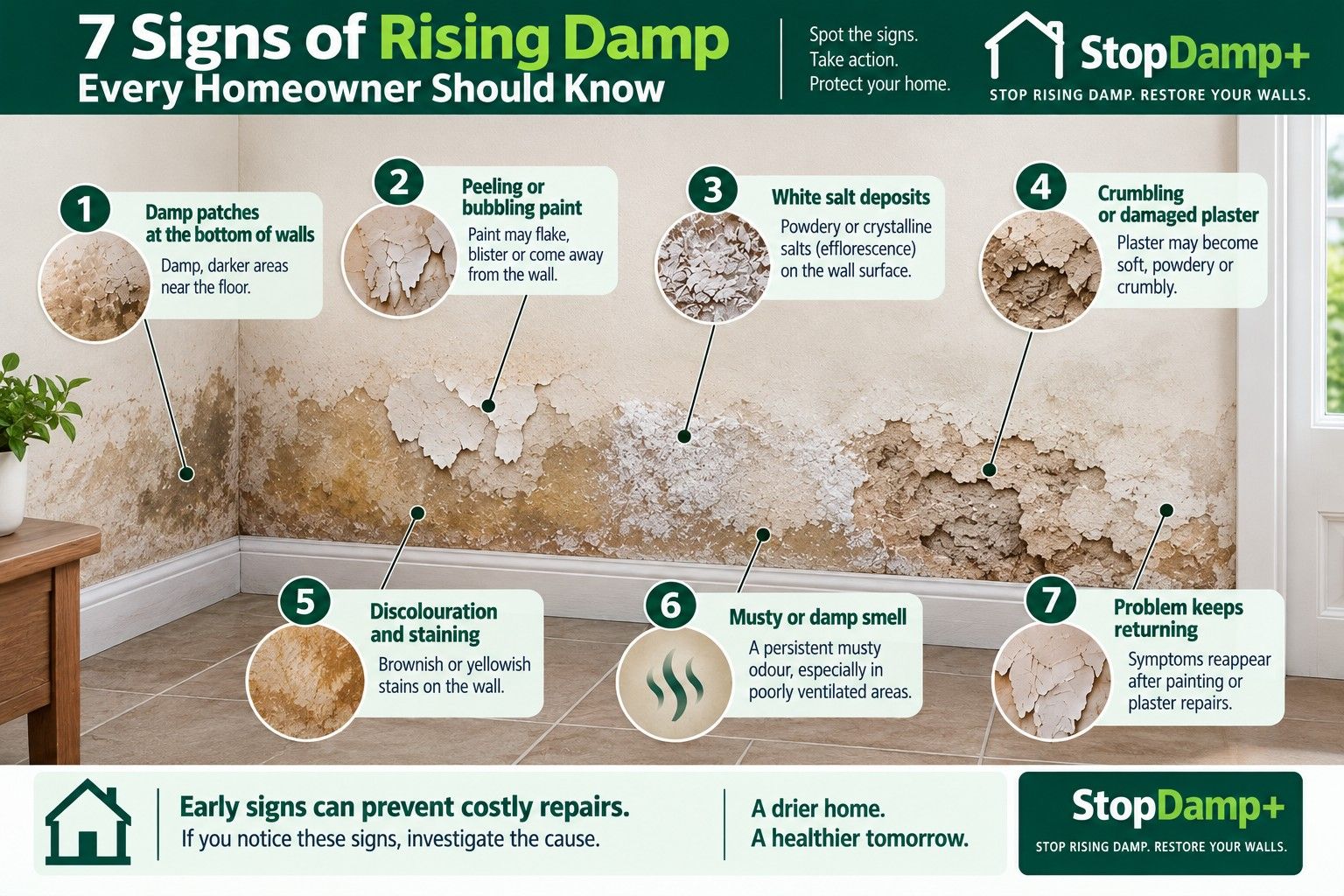
7 Signs of Rising Damp Every Homeowner Should Know
Damp patches, peeling paint, salt deposits and musty smells can all point to rising damp. Learn the 7 signs to watch for and why early detection matters.

How to Stop Rising Damp in Ghana
Why rising damp is so common in sandcrete block buildings, why repainting and replastering don’t fix it, and how to stop it at the source with an injected damp-proof course.
More articles are on the way. Suggest a topic